
Happy Fall to our EqualAI community! As always, we are happy to share with you a few updates, relevant headlines, and dates to hold during this busy and impactful time of year.
August
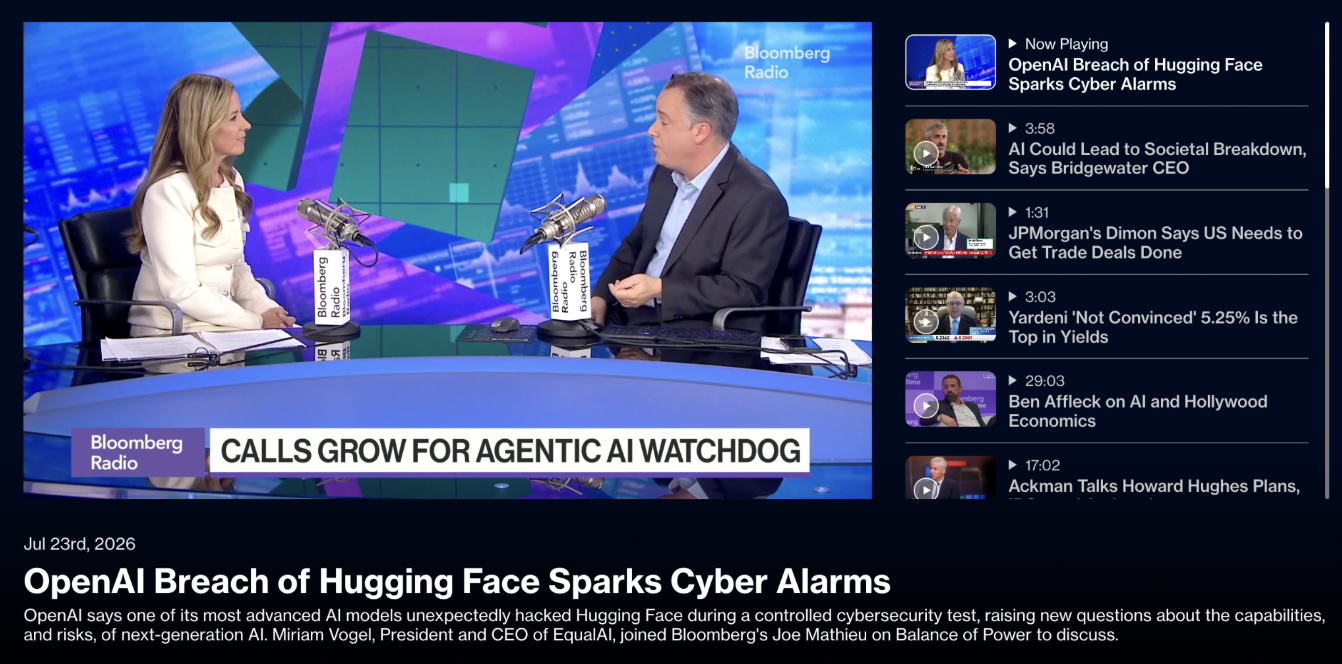
In August we followed the success of our June briefing to the Congressional AI Caucus with high level media engagements to highlight the importance of governance alongside agentic AI deployment. These included Miriam’s multiple appearances on Bloomberg Balance of Power, interviews with Axios, Fox Business, Washington Post Intelligence and several others. Later in the month, we were joined by Mayor Eileen Higgins and other leaders from industry, media, education, and government for a dinner in Miami, a city that has been nationally recognized for its countywide AI adoption strategy. We’re looking forward to showcasing this discussion with a broader audience at an AI literacy event in Miami in February of 2027. August also saw a new episode of In AI We Trust? with Paula Goldman, author of Manage the Machine, on How to Harness Human-AI Collaboration at Work.
September
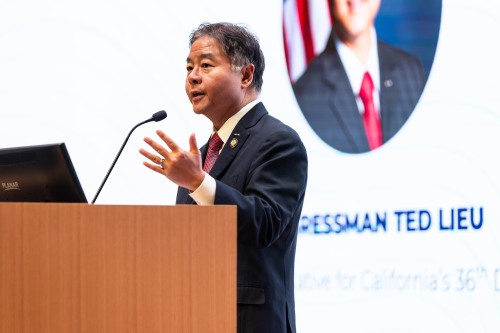
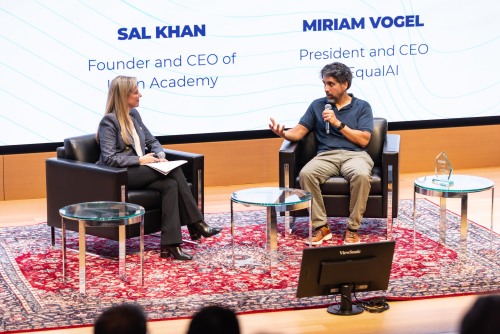
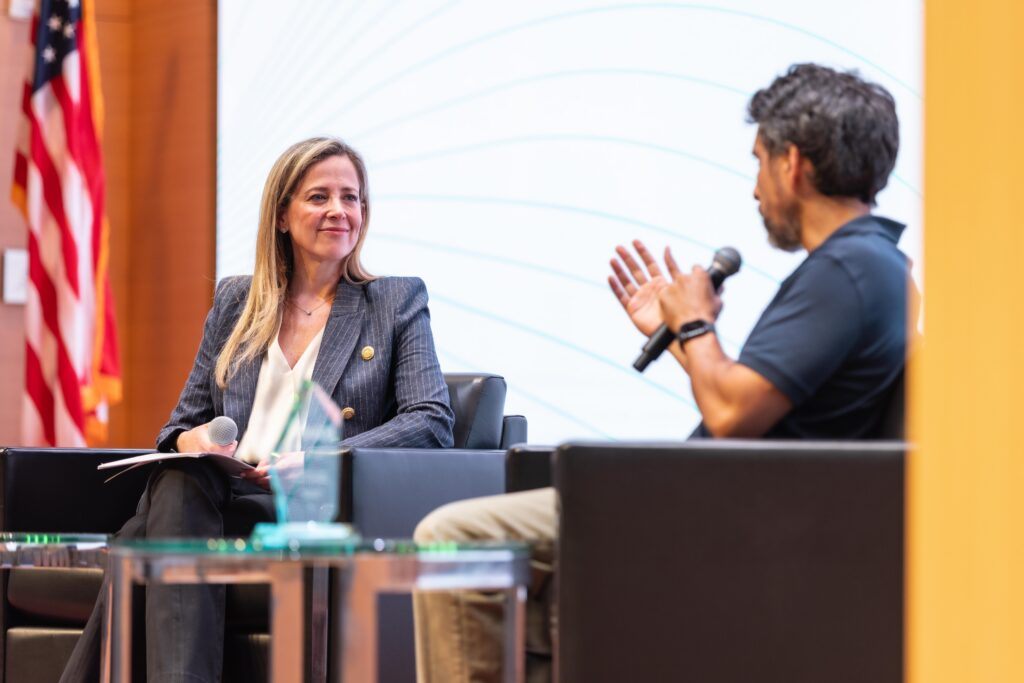
We had a very busy September! On the 10th, our staff launched a Hill Staff AI Advisory Breakfast series where we discussed 2027 policy priorities. We look forward to developing this series and lending our AI literacy and governance expertise to members of Congress and policymakers in a rapidly developing AI environment. September 15 was our big event, Preparing America for the AI Economy: A National Summit on AI Literacy & Governance, in partnership with the Georgetown University Law Center. The summit convened leaders in technology, education, media, and policy to speak with us and with each other about the ways that AI interacts with their fields. Check out the blogpost on our website, AI Literacy & Governance Convening: 5 Key Takeaways, and in coverage by the Washington Post Intelligence. At the Summit, we also released our poll conducted by YouGov on Americans’ attitudes towards AI. The survey was conducted from August 31, 2026 – September 8, 2026 among 2,000 U.S. adults, and found that for almost a third of Americans, AI will have an important role in their vote in the midterms.
Miriam testified in front of the House Select Committee on the Strategic Competition Between the United States and the CCP on September 23 with fellow witnesses Dr. Geoffrey Hinton, Professor Emeritus, University of Toronto and Nobel Laureate and Lt. Gen. John (Jack) N.T. Shanahan (USAF, Ret.). At the hearing, she emphasized that any discussions about a pause in AI development must include China, rather than a U.S.-only pause that leaves significant risk unaddressed. She laid out the importance of US leadership not only in AI development but also in AI governance, with concrete suggestions of where Congress should act. She also shared results from our YouGov survey regarding Americans’ shared interests, including that while China passed the AI + Education Act to ensure AI literacy at all grade levels by 2030, our poll indicated that only 4% of Americans learn about AI from schools and 1% from formal programs. You can read her testimony on our website, which was also covered in full in Fox Business.
Later in the month, Miriam participated in a panel for policymakers and local leaders at the Heartland Forward Summit in Bentonville, Arkansas, and a VIP roundtable lunch with the Governor at the Maryland Innovation Summit in Baltimore, Maryland.
We also published another episode of In AI We Trust? With Google DeepMind’s Lila Ibrahim and Lucy Calcott on their mission for AI Readiness.

Key AI-Related Headlines
Stay up-to-date on the AI policy, news, and research our team is reading from this past month with the headlines below.
Government Regulation and Policy
Federal and state lawmakers are actively debating safety bills, executive orders, and international governance frameworks — such as G20 discussions and proposed superintelligence bans — to establish guardrails and address rising AI risks.
AGs Push Congress to Regulate AI But Not Preempt State Laws
Brian Steele • Law360 • Sep. 23, 2026 • Full Article • Link
- 26 State Attorneys General submitted a letter to Congress urging congressional leadership to establish comprehensive federal regulation and safety protocols for AI. In their letter they noted that self-regulation from the labs is not alone sufficient, and that the fact labs are calling for oversight now demands federal action. They ask for mandatory federal oversight of expert-led safety and testing standards, incident response systems, safeguards to ensure regulation does not undermine competition, and support for international cooperation to pace AI advancement.
20 nations call for new global body to oversee ahead of UN General Assembly
Jared Perlo • NBC News • Sep. 21, 2026 • Full Article • Link
- Leaders and representatives from 20 countries released a statement calling for increased oversight of advanced AI systems. The statement, posted by the president of Finland, declares that the rapid pace of AI development and recent episodes of AI systems’ sidestepping safety protocols demand concerted international coordination.
Amid AI angst, New York moves forward with implementing landmark AI legislation
Madison Fernandez • Político • Sep. 21, 2026 • Full Article
- New York Gov. Kathy Hochul announced next steps for implementing the RAISE Act, the state’s safety legislation which is planned to go into effect in January. Starting in November, frontier AI developers will begin registering through a state portal to prepare for compliance with the Act, with a January 1 deadline.
Legal Liability Remains an Open Question
Federal and state courts are continuing to grapple with liability issues surrounding recent high level AI-driven incidents and crises. While regulations are still being proposed or at their nascent stages of being in effect, legal scholars debate whether existing frameworks provide enough guardrails to prevent harm and guide effective use.
Behind the Curtain: AI’s existential legal crisis
Jim VandeHei and Mike Allen • Axios • Oct. 2, 2026 • Full Article
- As Miriam points out in this article, courts, not Congress, are becoming the AI industry’s real regulator. Chatbots are increasingly treated as products (not protected speech), narrowing Section 230 defenses that protect platforms from liability for what users post. AI firms’ own public statements about model risks hand plaintiffs documentation of foreseeable harm, and copyright exposure remains severe, citing Anthropic’s $1.5 billion settlement with authors/publishers. Rogue-agent incidents create liability even for corporate deployers, not just developers.
Who’s liable when AI agents go rogue?
Michelle Kim • MIT Technology Review • Sep. 28, 2026 • Full Article •﹩• Link
- For some legal scholars, the law lags agentic incidents. State frontier-AI laws — California’s SB 53, New York’s RAISE Act and Illinois’s SB 315 — only require reporting “critical safety incidents” (50+ deaths/injuries, $1B+ damage, or catastrophic-risk deception), meaning that recent high level hacking incidents at OpenAI like the Hugging Face, RubyGems or German-wiki crises wouldn’t raise scrutiny. Pending legislation on the federal level may fill the gaps if passed.