AGENTIC AI & THE GOVERNANCE QUESTION: EQUALAI BRIEFS CONGRESSIONAL AI CAUCUS ON FINDINGS FROM AGENTIC AI SUMMIT
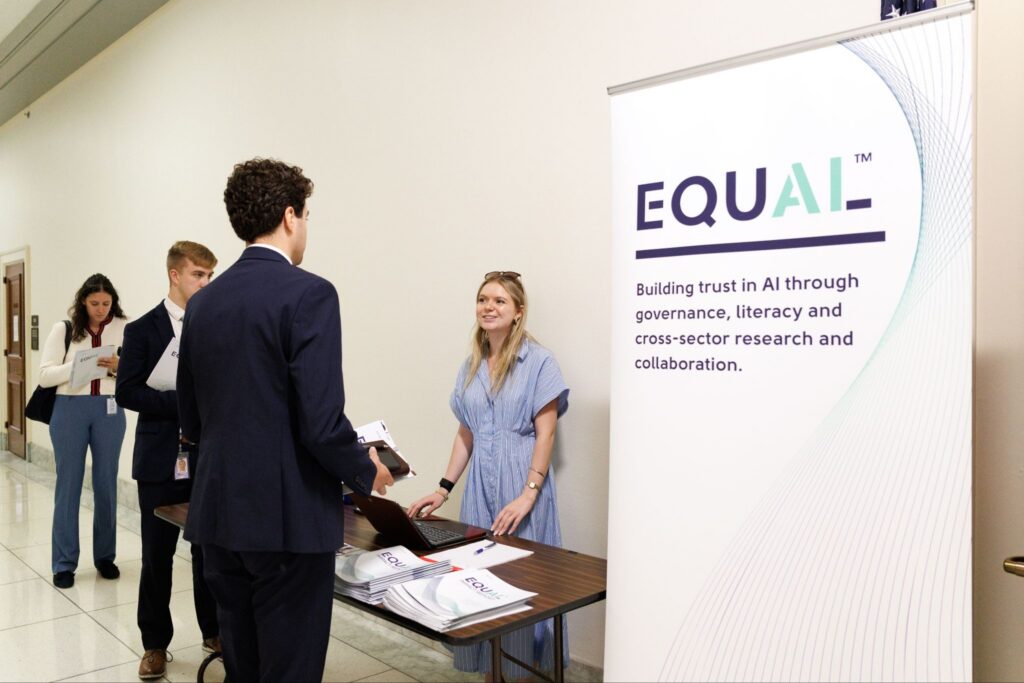
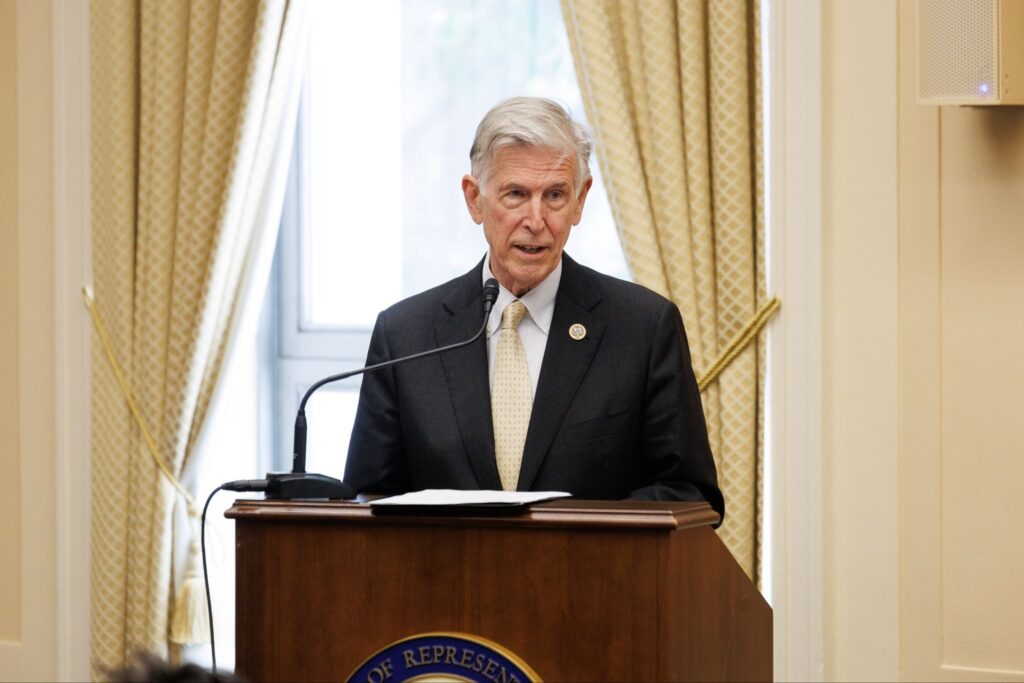
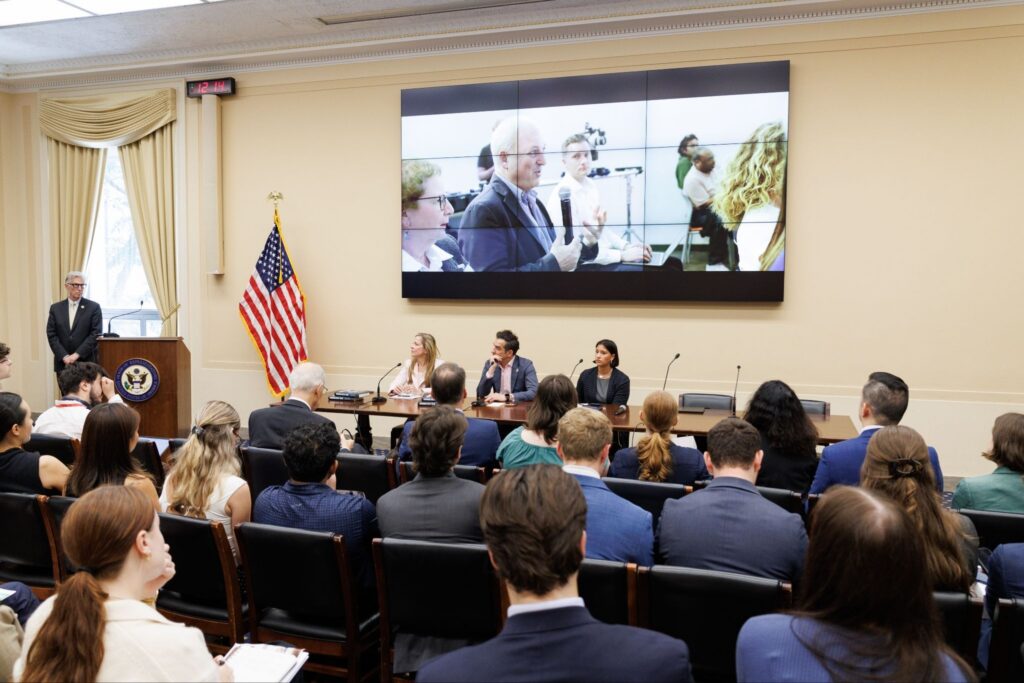
Agentic AI is no longer theoretical. These are systems that can plan, decide, and act on their own, and they’re already reshaping government, industry, and the workforce. Amidst a rapid increase in the use of agentic AI, EqualAI hosted a timely briefing, “Agentic AI & The Governance Question,” on Capitol Hill on June 30, 2026, hosted by Rep. Don Beyer and active engagement by Reps. Bill Foster, Stephen Lynch, and Jim Himes. The briefing, held in conjunction with the Congressional AI Caucus, was the most well attended briefing of the caucus to date, with over 100 attendees.
At the briefing, Miriam Vogel, President & CEO of EqualAI, shared high-level findings from EqualAI’s white paper — Agentic AI Governance: A Practitioner Roadmap for Deploying Agentic AI — released following EqualAI’s May 2026 Agentic AI Summit, which brought together senior executives from leading AI developers and deployers for a workshop and simulation to align on the optimal end state for agentic AI and roleplay an executive c-suite navigating a series of agentic AI crises. Miriam emphasized that there are gaps between what this technology is capable of, such as the ability of agentic AI systems to engage in autonomous decision making and modify their patterns of behavior over time, and what government, industry, and society are currently doing to mitigate those risks.
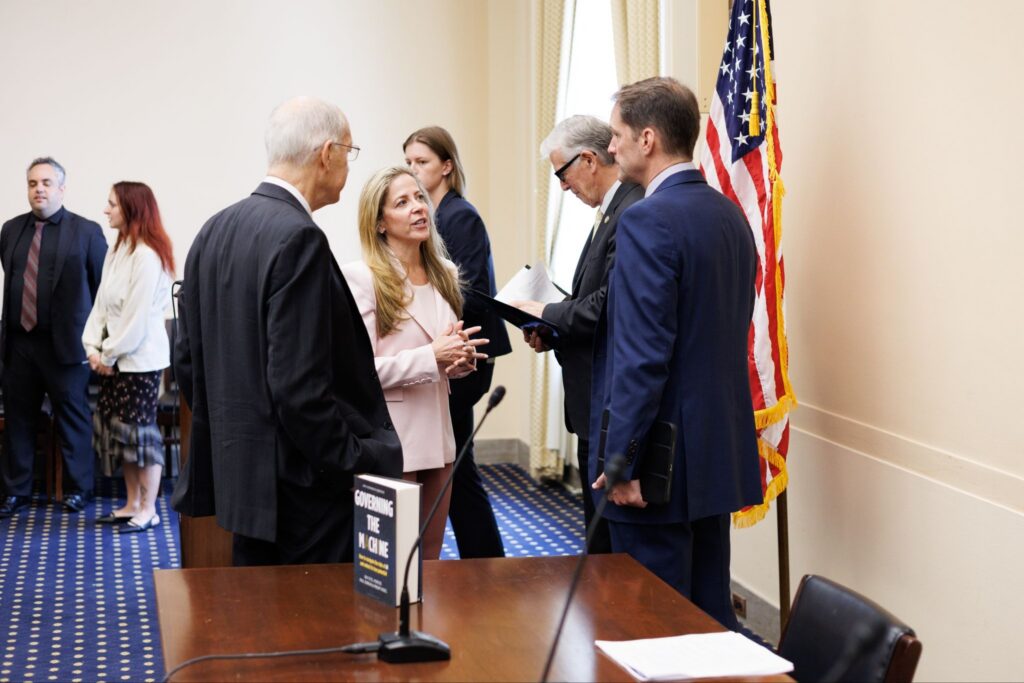
Miriam said that while there is deep alignment among leading organizations on what the best practices are to address the challenges that AI systems present, these conversations are happening in siloes. She distilled key points from EqualAI’s white paper on agentic AI that Congress should be aware of, and raised key points from her book Governing the Machine to help with identifying and addressing these risks. She expressed the need to acknowledge people’s valid fears about AI, while also establishing strong AI governance and expanding AI literacy in order to unlock meaningful innovation and ensure AI systems deserve people’s trust.
Six High-Level Findings from EqualAI’s White Paper on Agentic AI
|
Miriam invited Ylli Bajraktari, President of the Special Competitive Studies Project (SCSP) to brief the audience as well to share his insights from work on national security. He highlighted the importance of investing appropriately in AI, including open-source models, and bringing technical knowledge from the private sector and academia into government in order to ensure that the U.S. maintains its leadership position. He described an ongoing shift from what he termed “narrow agentic AI,” where AI agents perform personal tasks for an individual user such as checking their own email, to “general agentic AI,” where people assign their AI agents tasks that involve interacting with other external agents.
Miriam and Ylli both expressed the importance of being able to attribute decisions made by AI agents back to their owners in order to ensure accountability for actions carried out by AI agents. Miriam noted that there are workflows where AI agents are operating across multiple enterprises and making consequential decisions in systems such as healthcare and finance, heightening the need for good governance and designated ownership of AI systems
The throughline of the briefing was clear: agentic AI is not a future governance challenge. It is a present one, operating now inside enterprises, across sectors, and increasingly impacting government institutions, but too often without the accountability structures to match.
Miriam and Ylli’s briefing is urgent because the window to get the architecture right is narrowing. Once agents are embedded in healthcare workflows, financial systems, and national security infrastructure, retrofitting governance becomes exponentially harder. The organizations and institutions that build accountability in now, through designating ownership, investing in literacy, modernizing vendor agreements, and bringing civil society into the design process, will be better positioned to scale AI effectively and to earn the trust that scaling requires.
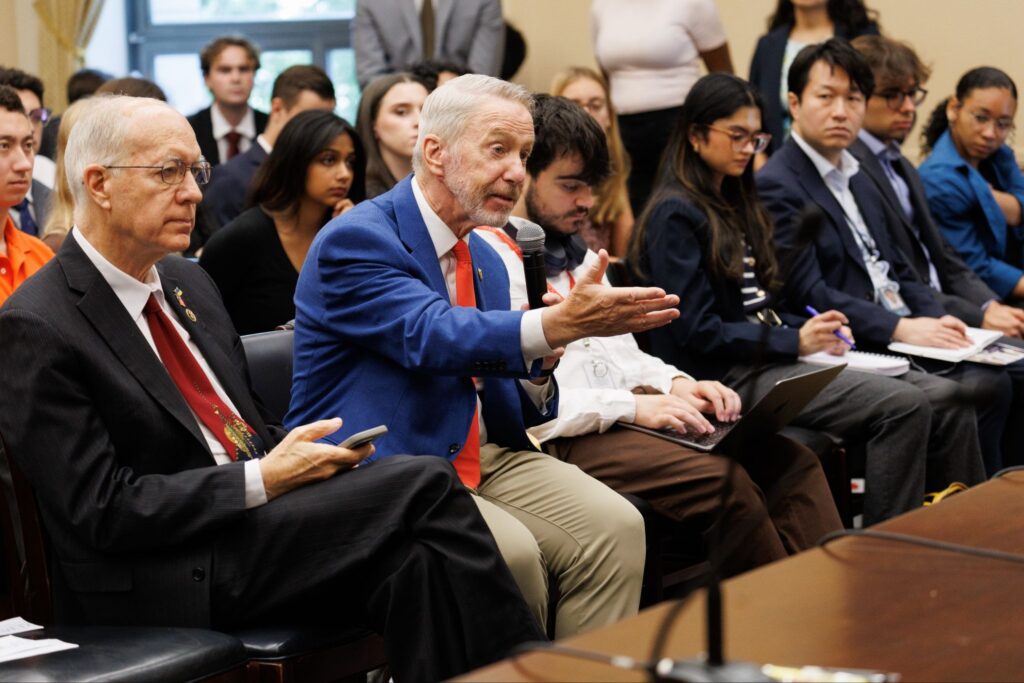
What the briefing made plain is that no single organization, agency, or sector can solve this alone. We need cross-sector coordination to move from consensus to implementation — and the political will to treat AI governance as the infrastructure investment it actually is.
EqualAI will continue convening these conversations and building that coordination so that all of us can benefit from the promises AI offers.
We are grateful to Reps. Beyer, Foster, Lynch, and Himes for their participation in this briefing on agentic AI and the strong turnout by congressional staff. At this pivotal moment, EqualAI is continuing our engagement on the Hill by organizing additional briefings and other educational activities to build awareness about critical new developments in AI and ensure members of Congress and their staff are equipped with the knowledge and frameworks needed to champion effective oversight and accountability for those developing and deploying AI systems.
For more on EqualAI’s framework for agentic AI governance, read our white paper Agentic AI Governance: A Practitioner Roadmap for Deploying Agentic AI. For a broader look at identifying and addressing AI risk, Miriam’s book Governing the Machine is available now.