
AI Literacy: What I’m hearing from the road
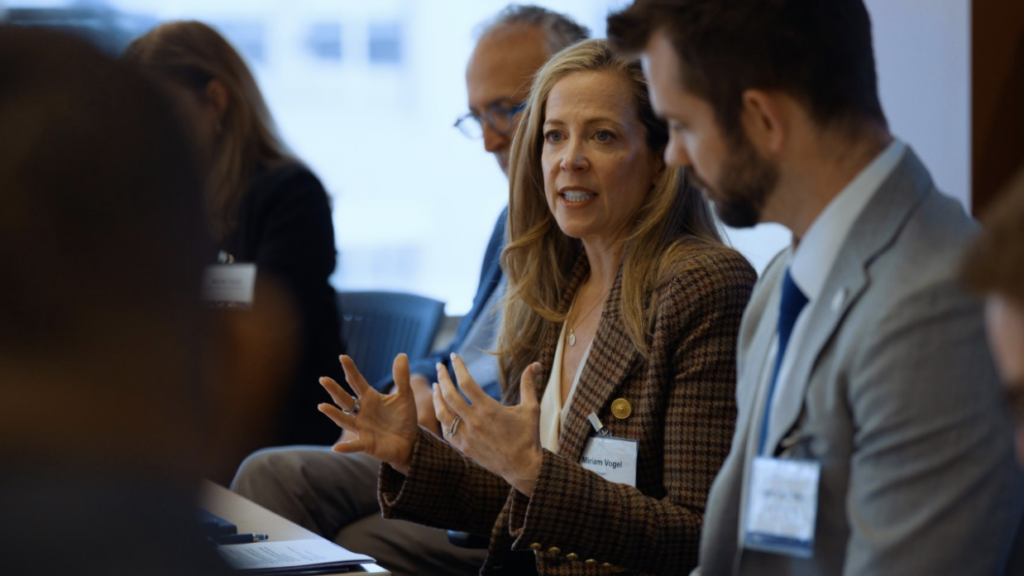
We went to Chattanooga, TN and Scottsdale, AZ to talk about AI. This is what we’ve learned.
As companies evaluate workforce capabilities in an era of rapid AI advancement, one question surfaces in nearly every conversation we have: where do I fit in? Workers across industries and income levels are grappling with what AI means for their jobs, their skills, and their futures. Leaders are under pressure to have the answers — and most aren’t sure where to begin.
Through our AI literacy initiative at EqualAI, we’re spanning the country with events, workshops, panels, and critical discussions to align executives, educators, policymakers, and the workforce on where the gaps are and what it will take to close them. Our most recent events, hosted in Chattanooga, Tennessee, and Arizona State University in Scottsdale, Arizona, have taught us ten salient lessons that anyone interacting with AI (everyone) must know.
1. The general public is more concerned than excited about AI.
When we surveyed participants at our AI literacy events, the majority expressed more anxiety than optimism about AI’s role in their futures. Taylor Stockton, Chief Innovation Officer at the U.S. Department of Labor, told us he spends a meaningful portion of his time pushing back against what he calls “doomerism” — not because the concern isn’t understandable, but because the data on actual workforce displacement doesn’t support worst-case narratives. Fear, left unaddressed, becomes a meaningful – and often appropriate – barrier to adoption. And the predominant sentiment is that workers who don’t adopt AI will get left behind.
2. Fear isn’t irrational — but history proves another story.
Every major wave of technological change has produced the same anxiety. ASU President Michael Crow put it plainly: from carriages to railroads to gas-powered engines, each era has brought genuine disruption and genuine fear, and the people and institutions that fared best were the ones that chose to evolve. Stockton noted that every major technology in modern history has ultimately created more jobs than it has displaced. What’s happening in most sectors right now is a transformation of what everyday work looks like, not the wholesale elimination of it.
3. The workforce gap is geographic as well as demographic.
Research from Angie Cooper’s Heartland Forward orward found that across a 20-state region representing the third-largest economy in the world, only 10 percent of Gen Z students are learning about AI in school, and only 9 percent feel prepared to use it in the workforce. More than 70 percent believe their employers should be teaching them how to use AI. Rural communities, which already face structural disadvantages in education, access and economic opportunity, risk being handicapped by an AI economy unless intentional investment reaches them. This is not a future problem. This is an immediate concern to address.
4. AI is a genuine equalizer, but only by design.
AI has the potential to dramatically expand access to opportunity, but that potential doesn’t actualize on its own. Arizona State University President Michael Crow made this case vividly: the tools exist right now to take a 45-year-old veteran re-entering the workforce, map his skills from military training to civilian job equivalents, identify matching opportunities, and begin the application process — without him needing to navigate any of that himself. That system is operational today. The questions are who has access to it, who is AI-literate in how to engage with it appropriately, and who even knows the numerous ways they’ve used it already today?
5. Abstract use cases don’t move people. Concrete ones do.
Fear and skepticism begin to shift the moment someone encounters a specific, tangible example of AI enhancing their work. At ASU, President Crow described designing a framework for a national addiction research laboratory during his drive to campus. By the time he arrived, the AI tool he used had already scanned faculty backgrounds, cross-referenced a newly announced federal initiative, and produced a directional outline for the research laboratory. Erin Mote of InnovateEDU described how AI can map every high school student’s path to dual enrollment in 20 minutes, work that currently takes enormous manual effort. Dr. Battinto L. Batts Jr., Dean of the Walter Cronkite School of Journalism and Mass Communication at Arizona State University, raised the idea of AI ingesting every news story ever written, and turning it into a living educational tool. In each case, the example made the possibility real in a way that no abstract argument could and presented a use case that was actually of interest and use to their community.
6. AI literacy is not the same as knowing how to use a chatbot.
True AI literacy, as Ilana Lowery of Common Sense Media underscored, involves understanding how these systems work, what their limitations are, and how to think critically about what is produced. AI literacy requires the same foundational skills — logic, critical thinking, source evaluation — that good education has always demanded, now applied to a new set of tools. Educators who view chatbots solely as cheating mechanisms need to reassess their assessment, according to Dr. Carole Basile, Dean of the ASU Mary Lou Fulton College for Teaching & Learning, and organizations that train their people only on the mechanics of prompting are building on sand.
7. Governance and adoption are mutually dependent.
People will not use AI they don’t trust, and AI doesn’t deserve trust without governance. ASU CIO Lev Gonick describes the university’s approach as “design, build, evolve” — action-first, with ethical tenets established early and governance developed through real-world feedback rather than prolonged committee cycles. Three years in, with 200,000 students and more than 20,000 employees, ASU has a living system that adapts. Adoption won’t wait for governance; governance must keep pace with adoption.
8. The institutions getting this right are building coalitions, not just policies.
Progress on AI literacy requires educators, employers, policymakers, and the people most affected to sit in the same room and build something together. Erin Mote’s work through InnovateEDU – which has helped implement AI policy labs in 29 school districts and 10 states – demonstrates the value of this approach. Three years ago, New York City Public Schools banned generative AI because they were terrified of unleashing technology on students that they couldn’t understand themselves. After working with InnovateEDU, they stood up a student policy lab, built guidelines collaboratively, and turned a prohibition into a comprehensive AI literacy baseline across every grade level.
9. Once AI literacy takes hold, the questions change.
Without a baseline understanding of how AI tools and systems work, the dominant questions in a room are defensive and fear-based, focused on risk, replacement, and what to prohibit. Once AI literacy is established, the questions become generative: what else can we do with this, how do we expand access matched with an understanding of governance, how do we build systems that take advantage of what’s now possible while maintaining guardrails? Elevating organizations to that second set of questions is the real goal of AI literacy work; that’s where progress lives.
10. Leadership is the variable that matters most.
The single most reliable predictor of AI readiness is whether senior leaders have decided that curiosity with confidence based on knowledge is a better organizing principle than caution — not ignoring risk, but refusing to let risk management become an excuse for standing still. EY underscored that for companies w AI governance in place, nearly 4 in 5 respondents said their company has improved innovation (81%) and efficiency and productivity gains (79%), while about half report boosts in revenue growth (54%), cost savings (48%), and employee satisfaction (56%). The readiness gap is real and closeable, but it closes from the top with a solid plan that takes into account AI literacy and AI governance to promote safe, effective AI adoption.
Where We Go From Here
AI literacy is not a training program. It’s an organizational posture — one that is built deliberately, sustained over time, and grounded in the needs of the people it serves.
Our AI Governance Playbooks, one designed for individuals and one tailored for Boards of Directors, give leaders a practical starting point for building oversight structures that make AI trustworthy, and our ongoing AI literacy convenings are designed to move organizations from awareness to action. If your organization isn’t working through these questions, it should be. Reach out to get the conversation started.
The Blogpost was also shared on Miriam’s Linkedin in March 2026. An original version of this article is available here.